
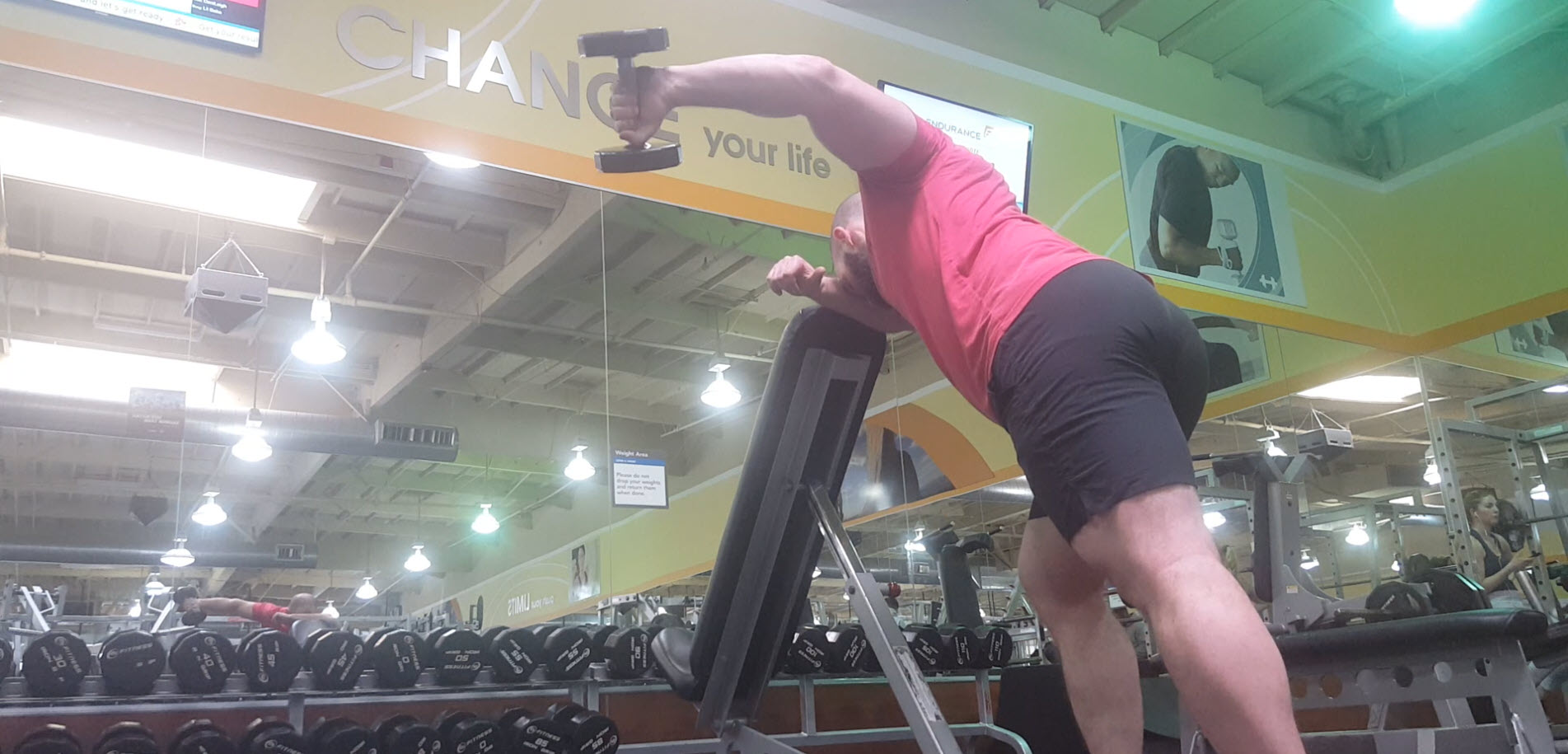
The most common number that you’ll find slotted into the third digit of a tempo (the ‘lift’) with most P/S workouts is ‘1’. In most cases, lifting a weight reasonably quickly will serve you just fine. But there are some cases where deliberately moving more slowly on the way up makes for a much more effective exercise.
One such case is with exercises where you lift a dumbbell in a direction other than straight up. For example, a lateral raise. With a lateral raise, the dumbbell doesn’t just move up but also away from your body. The weight travels in an arc, and for the bottom portion of this arc it moves more laterally than vertically. Moving a weight sideways is, of course, much easier than lifting it straight upward against the force of gravity. You may be able to push a car, but I doubt you can lift one.

This can spell trouble for a lateral raise because your body can very easily (without you realizing it) use the easy first half of this exercise to build momentum and more easily complete the second half. Momentum performs the work your muscles would otherwise need to do, and less muscle involvement means less improvement. It’s no surprise that the lateral raise is one of the most cheated exercises you’re likely to find at any gym.
The two-second concentric (for example, 2020) is a tool to squash this momentum. Move more slowly during the easy part; leave the intended amount of work for the part of the exercise that matters.