

This split squat variation is a creation that I use instead of the Bulgarian split squat. I know that the Bulgarian split squat is a popular exercise that many gymgoers swear by, but I’m sorry to say that I’m not a fan. Bulgarian split squats burn like crazy and have some nice advantages over other variations, but they come with some but they come with some downsides that too often get swept under the rug.
The first problem with the typical Bulgarian split squat comes from the elevation of the back foot. With the front foot elevated split squat, we prop up the front foot to relieve tension on the anterior hip of the non-working side. Elevating the back foot does the opposite – it places a huge strain on the hip flexor and psoas of that back leg (Image A). Very few trainees ever have a need to extend their hip to this degree, so unless you have ridiculously mobile hips, this lift is very likely to put your pelvis into serious anterior tilt, which really cranks on your lower back. If you spend any portion of your day sitting at a desk, or notice that you have tight hammies that don’t seem to get better even if you stretch, there’s a decent chance you already suffer from anterior pelvic tilt, and the last thing you want to do is exacerbate the problem. The way most trainees compensate for this massive stretch is to lean way forward (B), which dampens the effectiveness of the exercise on the working leg.
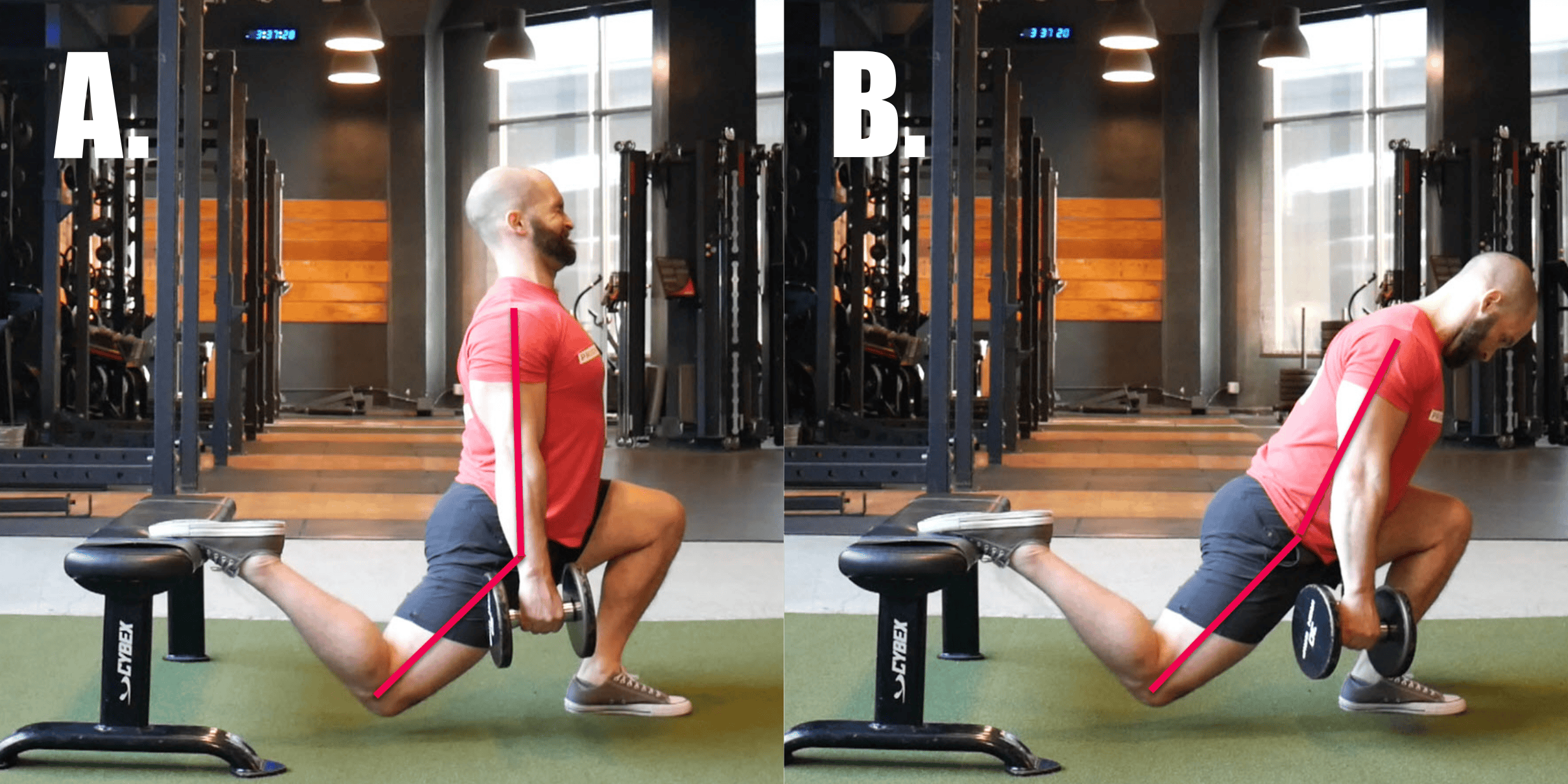
Now, I’ll concede that with the right combination of careful setup and adequate mobility, it is possible to work around the above issues. But even in the best of circumstances (C), you’re still left with a second problem: with the Bulgarian split squat, the range of motion is very likely inhibited by the floor. As soon as your knee touches the ground, well, there’s no more room to descend, and there’s a ton of value in those bottom extra inches that you can’t access with this variation. And if your knee doesn’t touch the floor, well, it’s probably because your hips have already run out of room (see above).
This isn’t to say that there aren’t good aspects to the typical Bulgarian split squat, because there absolutely are. Most notably, they really go after your glutes. But might there be a way to capture the good parts of this exercise while avoiding the downsides? Meet the deficit split squat.
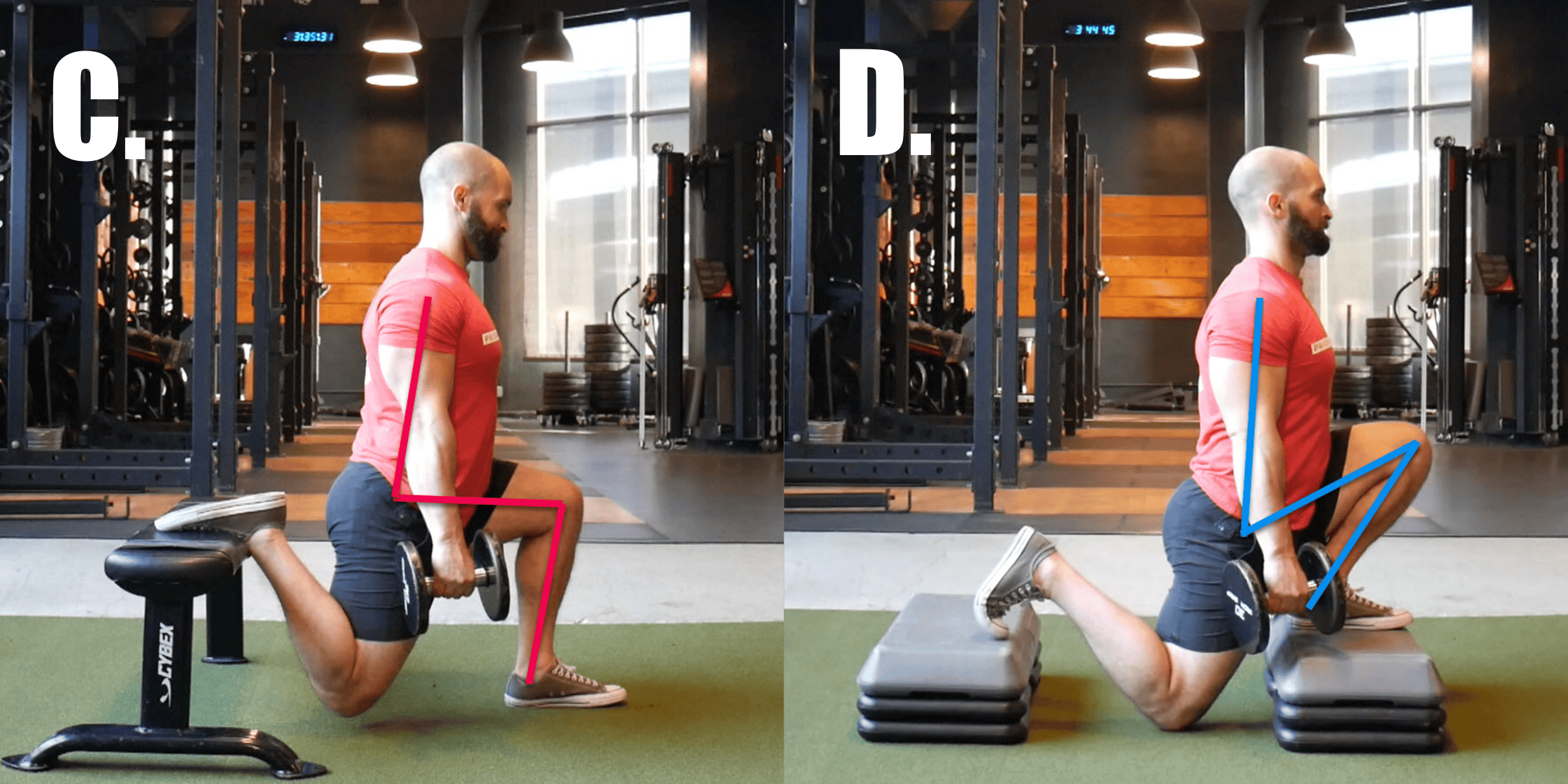
By elevating both feet instead of just the back foot, you create space for your back knee to lower into. This allows your back hip to stay more toward neutral, as opposed to reaching way back behind you, which means far less strain and a neutral back and pelvis. This extra space also means that your knee has much more room before it touches the ground, which allows the working side to achieve better depth (D). This additional range is significant because your glutes are more active at deeper ranges of hip flexion (more depth = more booty).
If you love your Bulgarians, I totally get it. It’s not that Bulgarians are a terrible exercise because they certainly aren’t, but they do come with some serious baggage. If it were possible to get all of the value of this exercise while leaving the baggage behind, shouldn’t we just do that?