
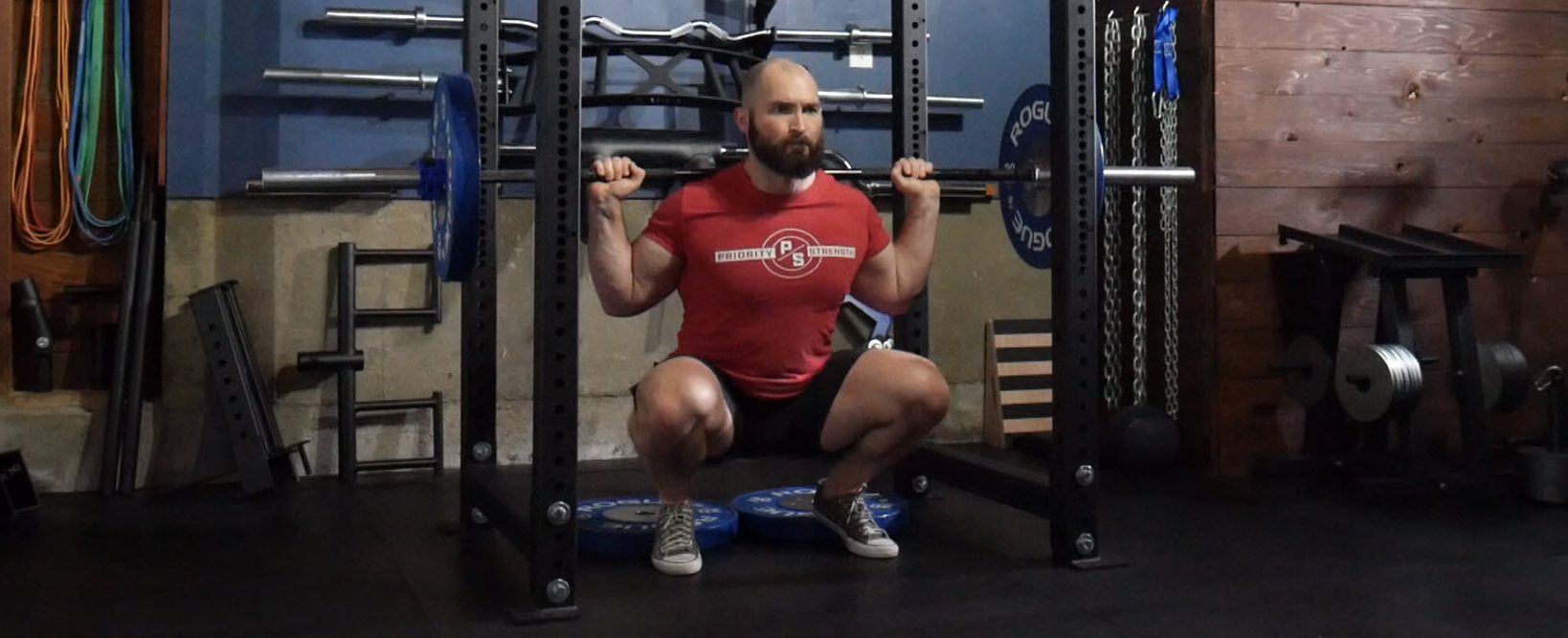
All other things being equal, a deeper squat is a more effective exercise, but reaching the ideal depth without making compromises is often difficult due to mobility restrictions at the ankle or anatomical differences like height and limb length. Elevating your heels when squatting is a simple method that can help you achieve a deeper squat while maintaining alignment between your ankles, knees and hips.
When you squat, your ankles dorsiflex as your knees bend and travel forward. If you get to a point where your ankles can’t flex any further, you’ve either squatted as deeply as you can, or you can only get deeper by way of making compromises like turning your toes too far out or letting your heels lift off of the floor. Propping up your heels effectively gives you bonus range at the ankle, allowing your hips and knees can bend further before limited dorsiflexion gets in their way.
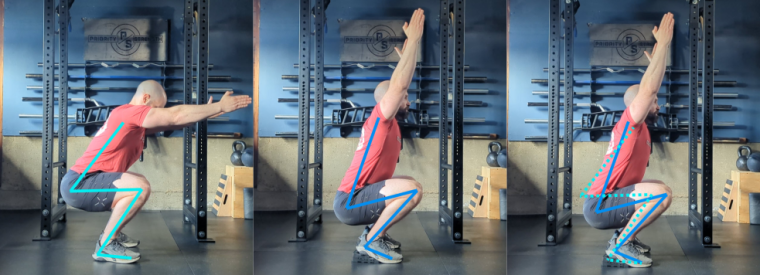
A few noteworthy points about the images pictured here: with elevated heels we see 1. A more upright trunk 2. Lower hips, and 3. More flexion at the knee
The simplest way to elevate your heels (other than wearing Weightlifting shoes) is with a set of plates, and this will work just fine in most circumstances. But the best way to prop up your heels is with a tool that provides support under your entire foot. A slant board works nicely in situations where your feet are close together and toes are pointing straight ahead, but you shouldn’t count on these being available at your gym. The best tool is a pair of portable squat wedges. They’re cheap, portable, and (in many cases) adjustable. Throw them in your gym bag, and you’ll be all set for any squat variation that comes your way.