
Front Rack Alternatives
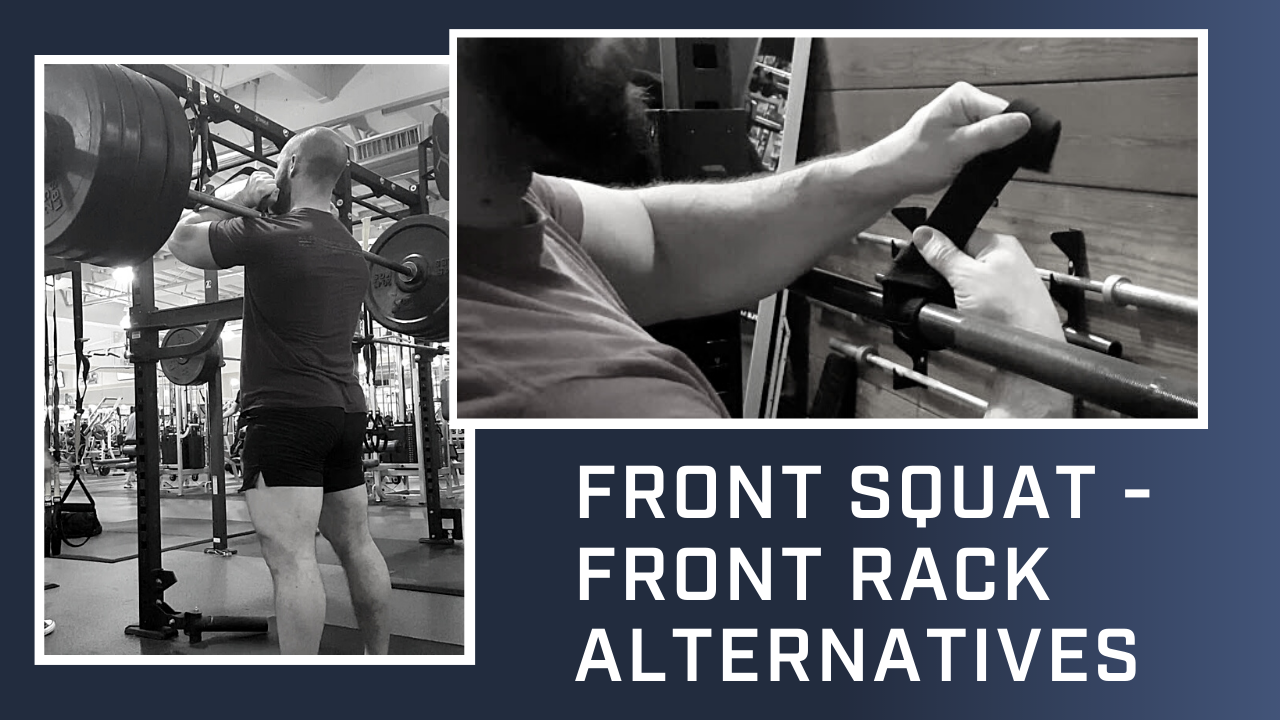
- The preferred alternative to the standard front rack is using wrist straps as handles
- Arms-crossed works well too, but it’s slightly asymmetrical since one arm is crossed over the other
The front squat requires you to support the barbell across your shoulders, in front of your head and neck. This position is called the front rack, and it can be quite challenging for many trainees. The front rack commonly causes discomfort in the wrists and/or clavicle, and in some cases, it can be prohibitive to performing the exercise.
If the standard front rack is a non-starter for you, there are two alternatives you can use. The first is to cross your arms, placing each hand on the opposite arm rather than on the barbell. This method can work well, though it isn’t my preferred alternative because it is inherently asymmetrical.

The second method is to use your wrist straps as handles. Wrap each strap around the bar, just outside shoulder width. Then, instead of supporting the bar with your hands or fingers, you grasp the length of each strap. This method is more forgiving, but more closely mimics the standard front rack.
No matter which method you use, one useful cue is to lift your elbows as high as you can. Elevating your elbows creates a more pronounced ‘shelf’ across your shoulders for the barbell to rest upon. If front squats feel uncomfortable on your clavicle, lifting your elbows can help. It’s this shelf, not your hands (or collarbone), that supports the weight of the bar.
While both the crossed-arms method and wrist straps are viable ways to perform the front squat, the standard front rack is worth using, even if it’s slightly uncomfortable. Spending time in the front rack can itself serve as a useful stretch. The more time you spend in the front rack, the easier it becomes.